The Early Years
Adel’s story begins in 1847 when the Iowa General Assembly established Dallas County, transforming John Miller’s land into what would blossom into the city of Adel. Originally known as Penoach, a Native American term meaning “far away,” the settlement was renamed Adel, a name meaning “dell” or wooded valley. Nestled in a basin surrounded by breathtaking prairie, hills, and the North Raccoon River, Adel was destined for growth. Its central location secured its role as the proud county seat of Dallas County - a title valiantly defended over the years.
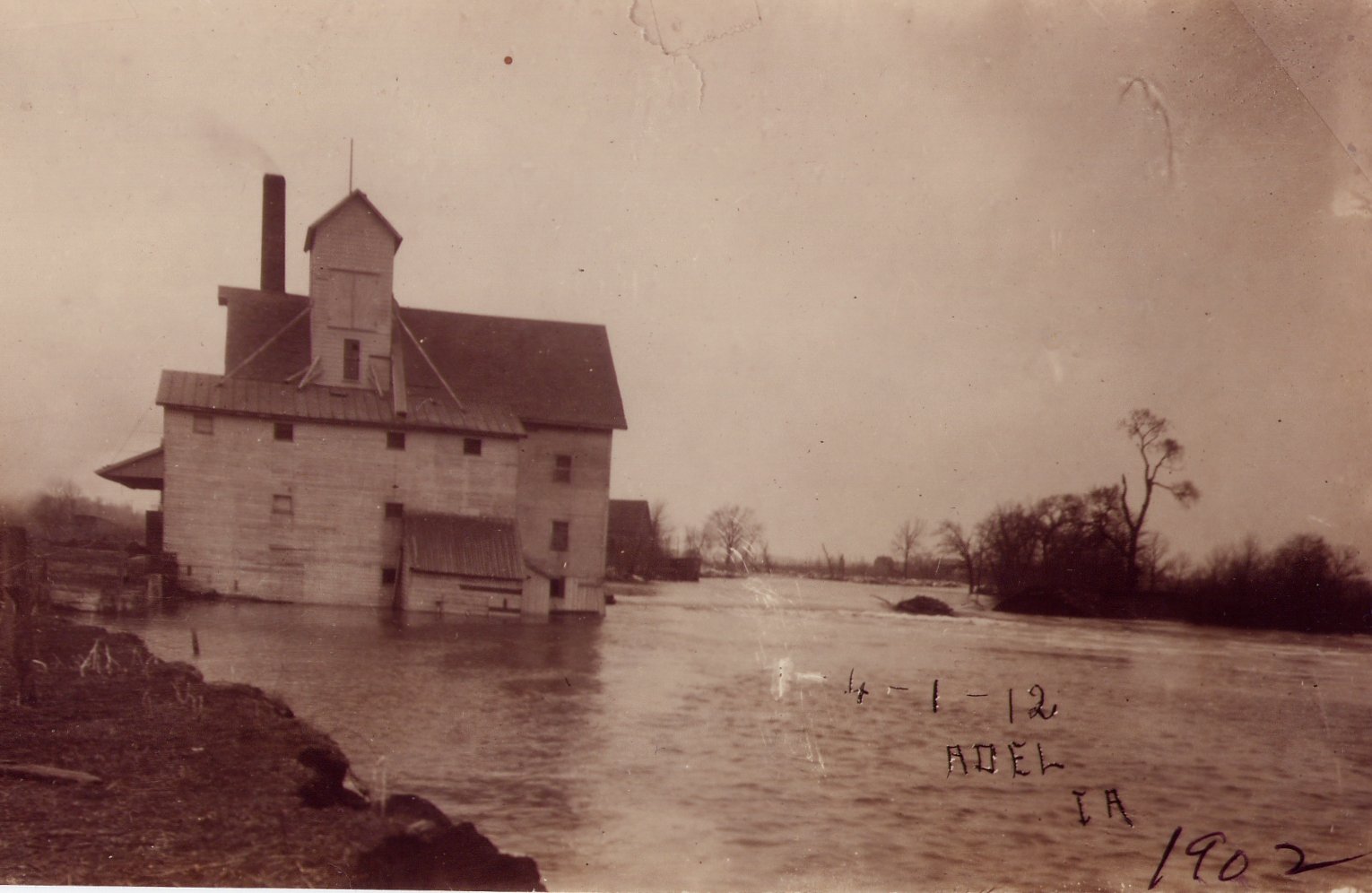
In its early days, Adel stood out as a beacon of innovation, flourishing without the influence of the railroad. Its founders embraced an egalitarian street grid that reflected simplicity and equality, steering clear of numbered streets, boulevards, or avenues. Even though growth was gradual—with just twenty-five houses and three stores by 1855—Adel benefited from its strategic location along the route between Des Moines and Council Bluffs. The town became a vital source of supplies for travelers and settlers moving through the region. The establishment of a flour mill in 1856 ignited further settlement and hope. The picture below of is the mill in 1902.
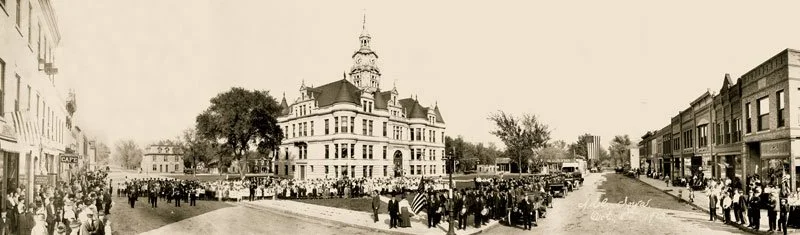
Adel gained new momentum in 1879 when it connected to the railway system, energizing local leaders and the Adel Improvement Company. Their efforts brought public waterworks, a new library, hotels, and brick-paved streets, strengthening Adel’s reputation as a forward-thinking community. That same spirit of progress was reflected in the construction of the magnificent French Renaissance–inspired Dallas County Courthouse, completed in 1902. Designed by Proudfoot & Bird, it became a proud symbol of civic identity and remains a striking architectural centerpiece of the community.
Brick Factory and Streets
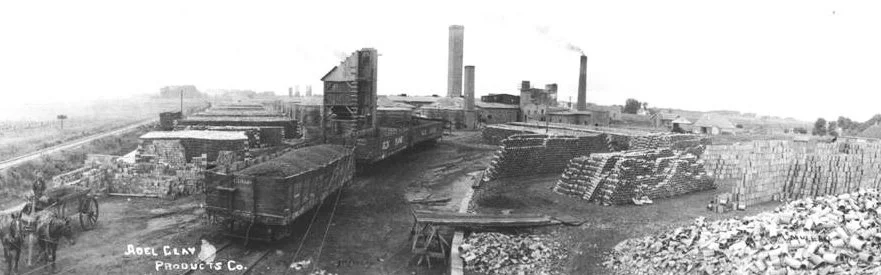
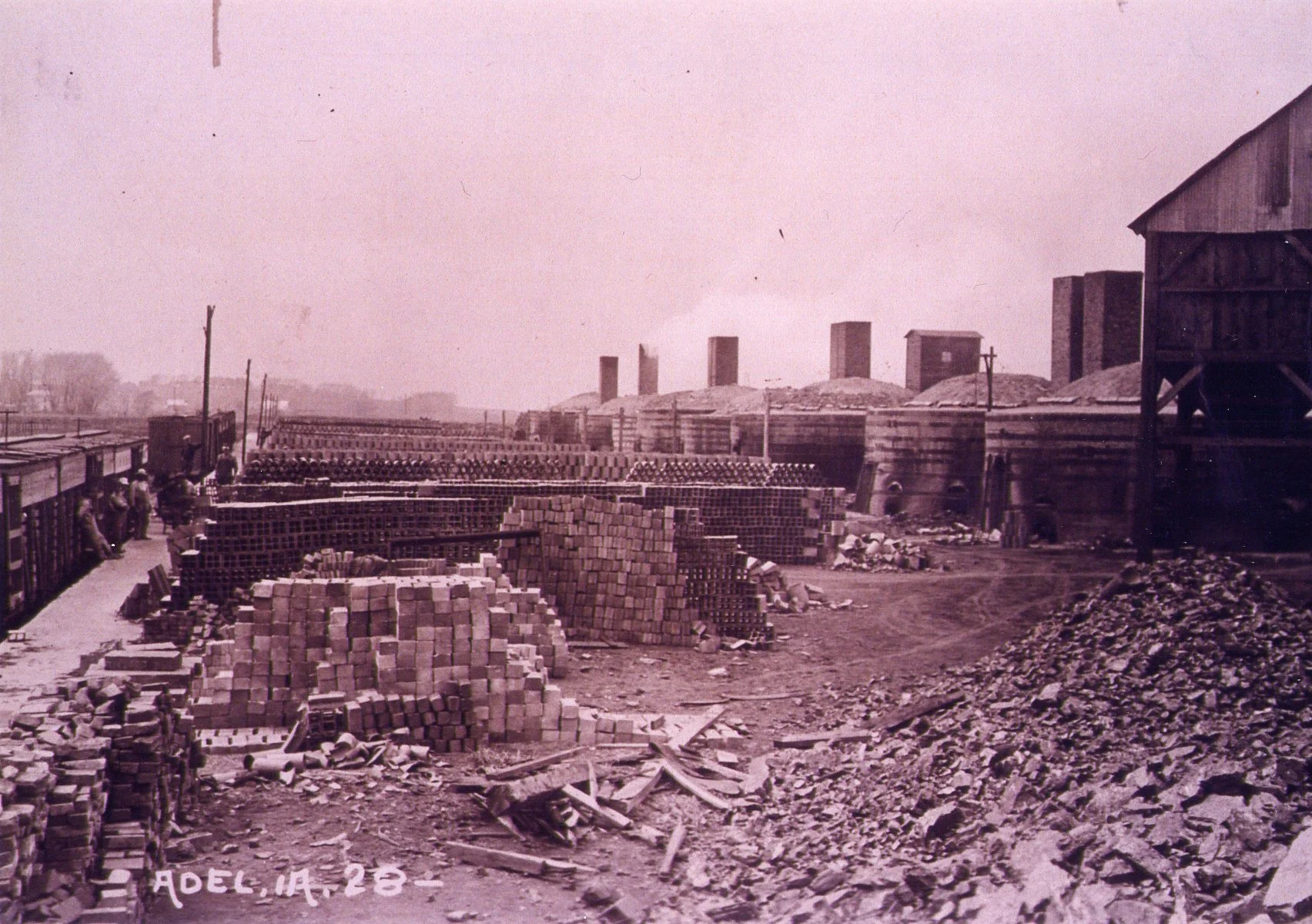
Brickmaking became another important part of Adel’s identity. The industry began in 1882 with R.M. Kearns & Company, which produced high-quality bricks from the rich clay and shale deposits left by glaciers. Through mergers, the United Clay Products Company evolved, with the Adel plant renowned for its efficiency.
Brick was used not only in buildings but also to pave Adel’s streets. Beginning in 1892 with the courthouse square, brick paving became a defining feature of the community. In later years, there were discussions about replacing the brick streets with asphalt or concrete. Instead, ongoing repair and preservation efforts have helped maintain them. Today, Adel’s historic brick streets remain a centerpiece of the downtown area and a visible reminder of this enduring legacy.
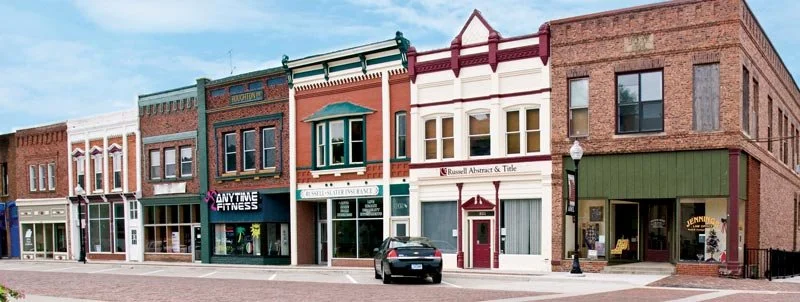
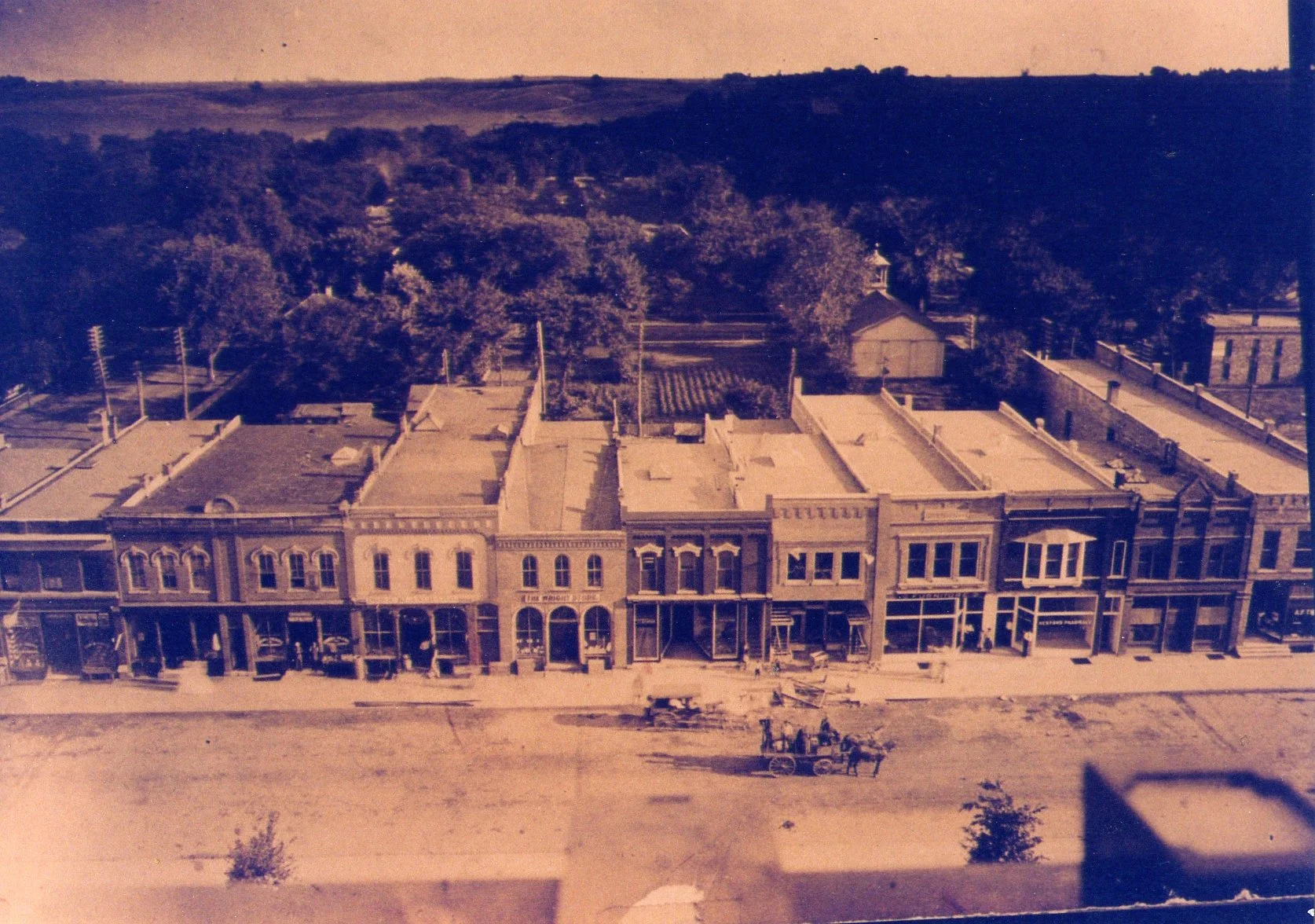
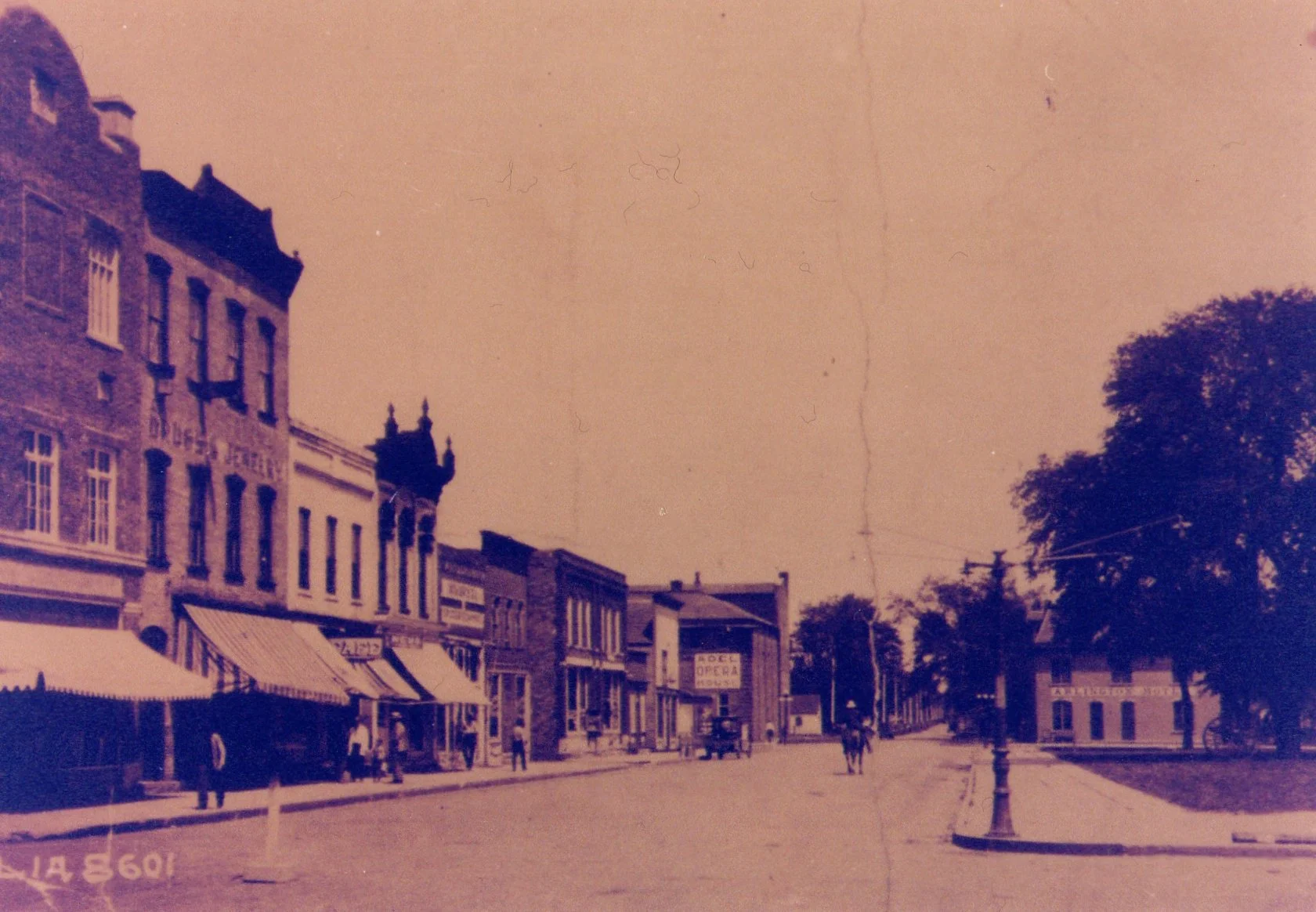
Adel’s downtown architecture reflects the rich evolution of American styles. Late 19th-century Victorian and Italianate designs gracefully transitioned into Classical Revival styles in the early 20th century, characterized by elegance and symmetry. The Dallas County Courthouse, with its French Renaissance influences, reigned as the crown jewel. Later constructions integrated Commercial Style buildings, Throughout these changes, locally produced brick infused Adel’s structures with a distinctive, vibrant character. The first picture below shows a south view of the square from the Courthouse in 1909 and the second illustrates downtown Adel in 1906.
Post World War II
While many rural Iowa towns faced challenges after World War II, Adel thrived, thanks to its proximity to Des Moines and its identity as a welcoming county seat. An increasing commitment to preservation culminated in the designation of the Adel Public Square Historic District on the National Register of Historic Places in 2009. Post-World War II, simpler modern facades emerged, featuring innovative materials like metal and concrete block. Today, Adel proudly honors its rich history through thoughtful preservation guidelines and community spirit, ensuring that new developments beautifully complement its historic character.
In summary, Adel has evolved from a humble frontier settlement into a vibrant county seat, shaped by its magnificent courthouse square, robust brickmaking industry, and a strong tradition of civic improvement. This harmonious balance of preservation and adaptation allows Adel to respect its illustrious heritage while continuing to flourish as an integral part of the Des Moines metropolitan area.
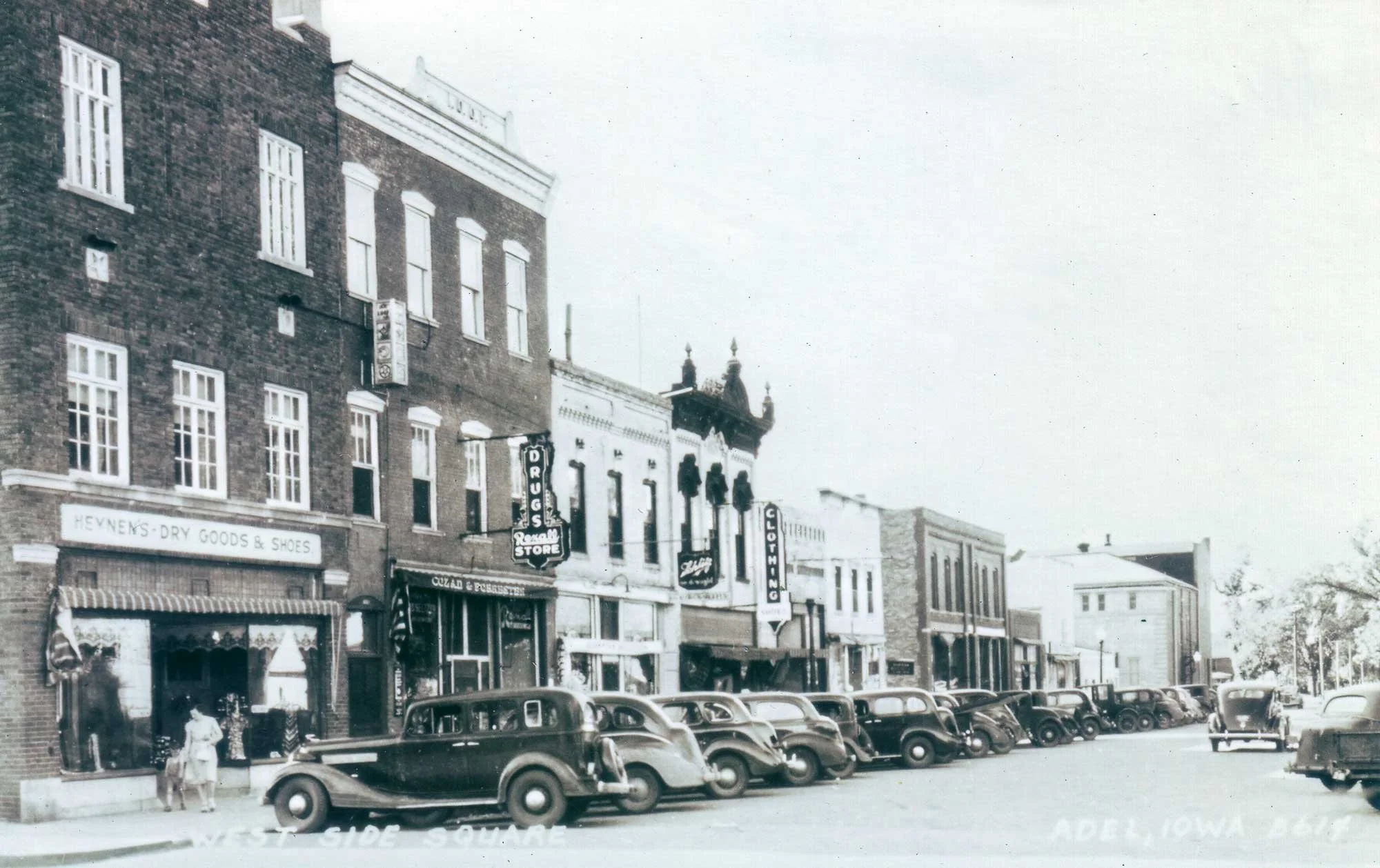
Click here to view Adel’s Public Square historic district on the National Register of Historic Places (Registry) and click here to view Adel’s application to be on the Registry. The application contains extensive detail about both Adel and its Public Square Historic District. Russell Abstract & Tile in the picture below is one of Adel’s earliest businesses and one of the buildings listed on the Registry.