
Risser Dry Goods: 101 N 9th Street
-
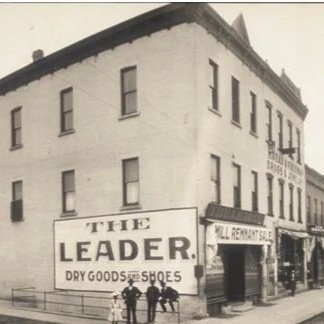
![Corner view of store. Giant sign on building taking up a floor that says The LEADER dry goods and shoes.]()
The Leader Dry Goods and Shoes
-
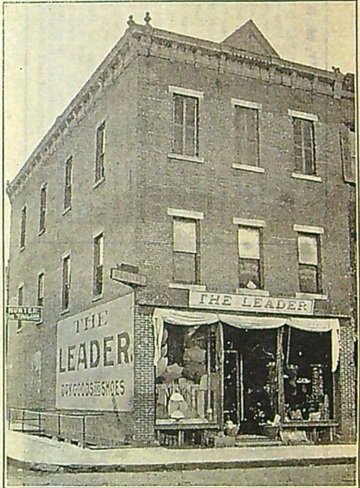
![Front view of a 3 story building with The Leader sign above front door]()
The Leader Dry Goods Front View
-
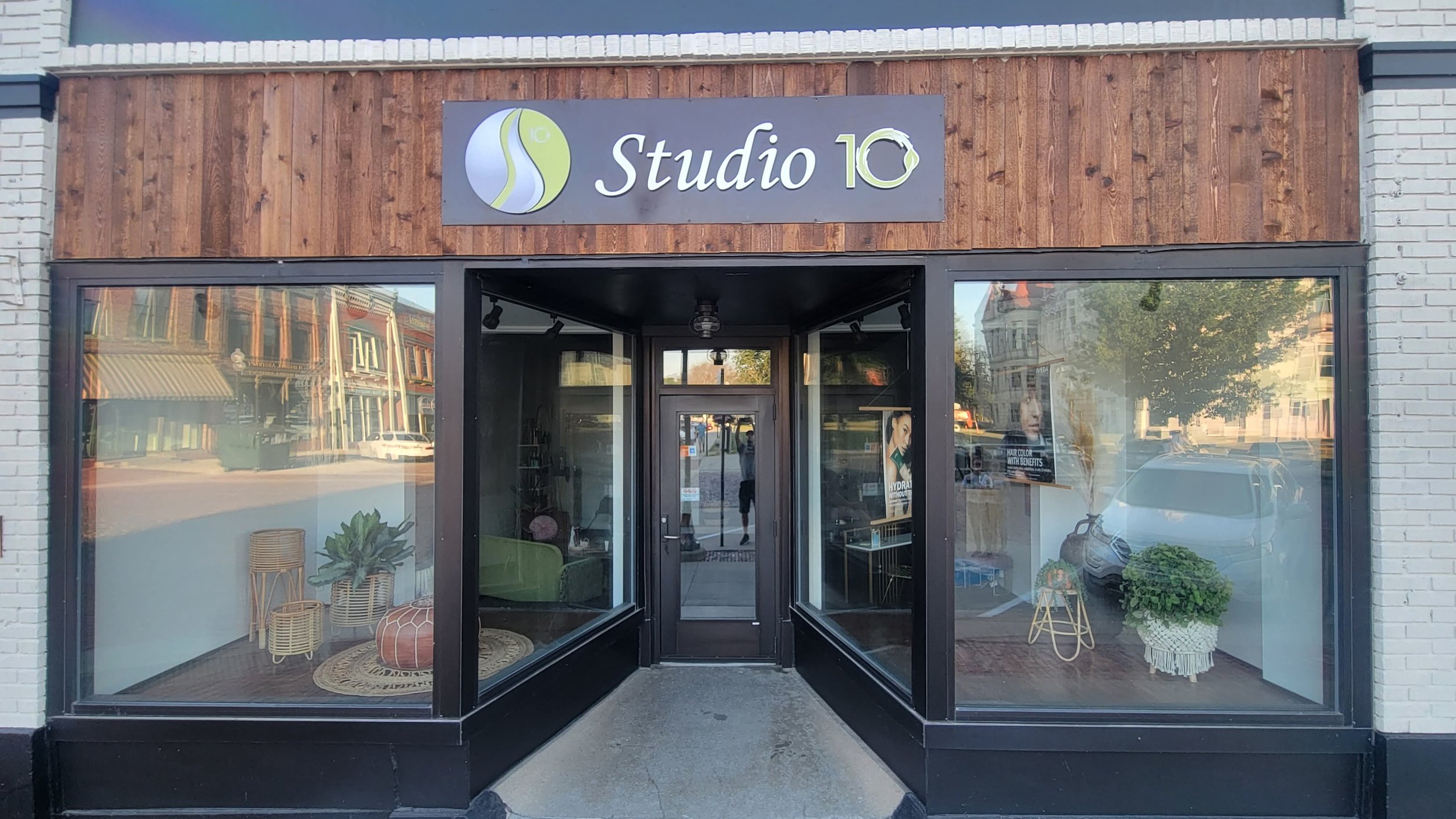
![Front door of Studio 10 salon]()
Studio 10 Salon - First Floor
-
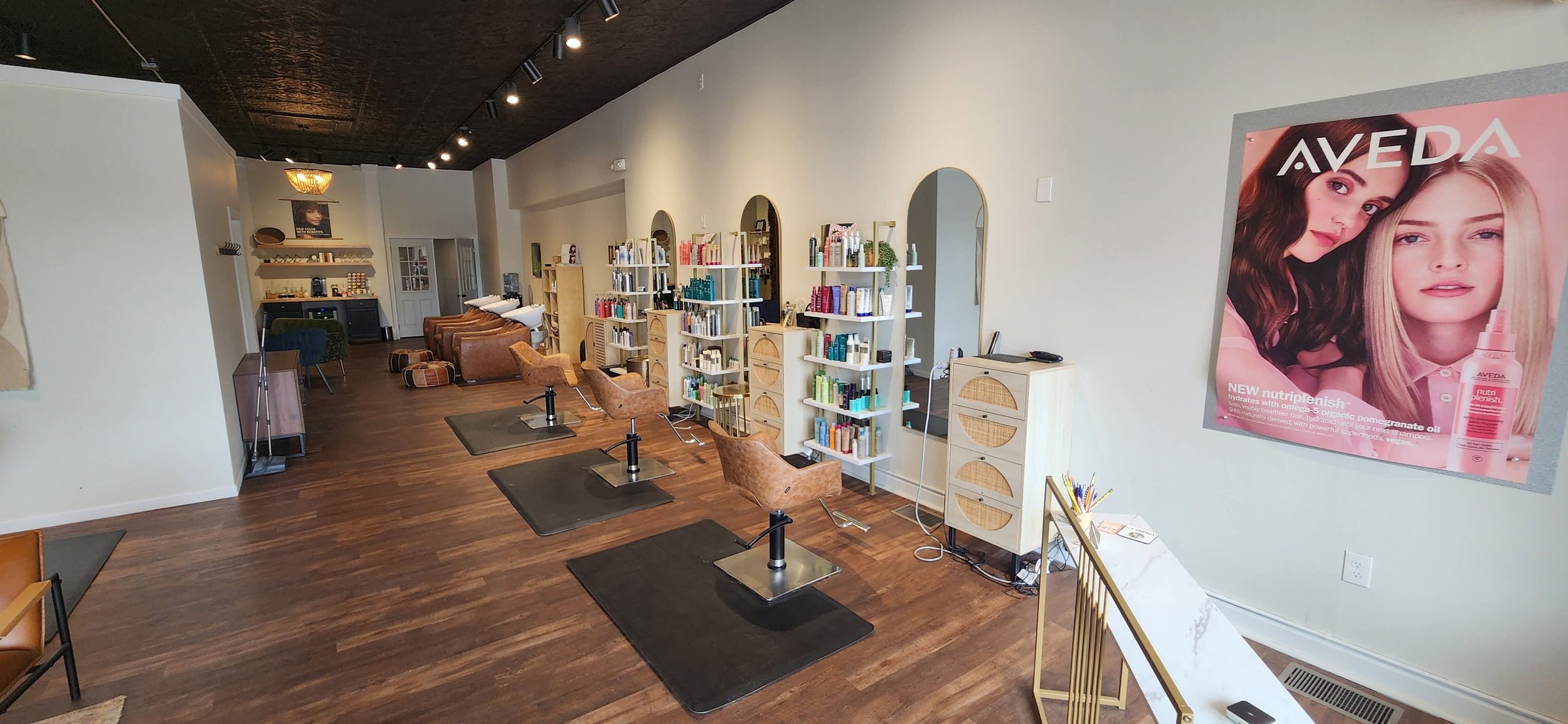
![3 salon stations with a chair, styling cart, mirror, and products at each station]()
Inside of Studio 10 Salon
-
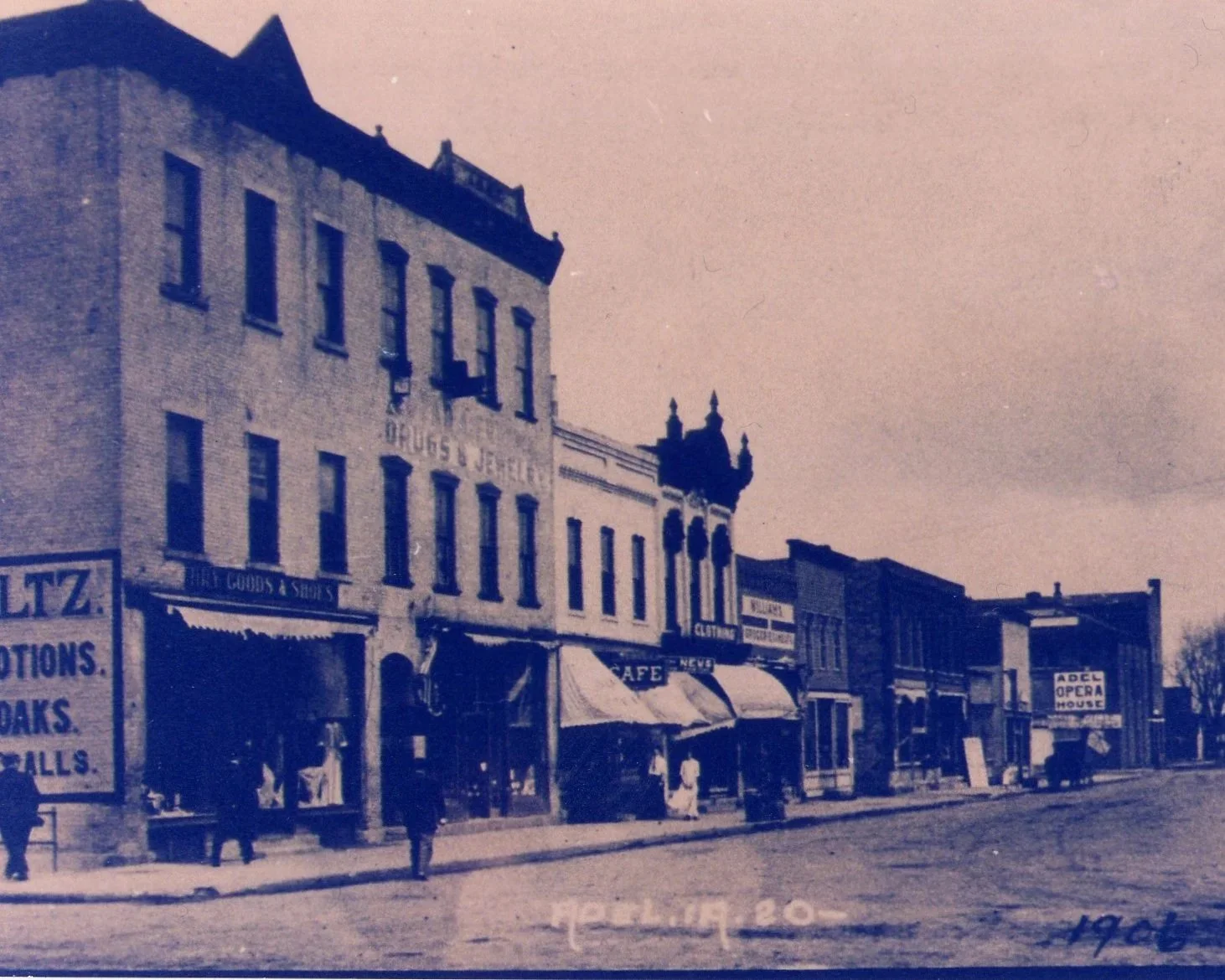
![]()
Block View - 1906
-
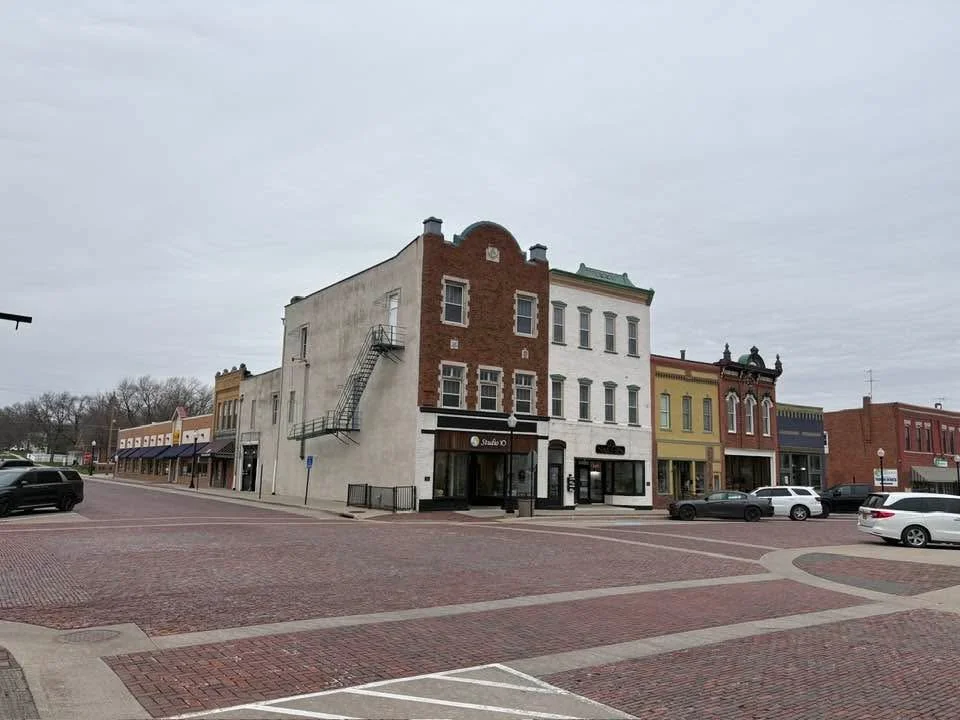
![]()
Block View - 2026
Risser Dry Goods
101 N 9th Street
Built in 1867, The Risser & Son Building was the first three-story building in Adel. J. Risser operated the Risser Dry goods Store until 1907. In 1908, Art Heynen purchased the building and renamed it the Leader Dry Goods and Shoes Store. In 1948 he sold the building to the Woodward Company. Other owners of the building include Art Heynen (the Anthony Company), Jerry Roberts (Roberts’ Clothing), and Aubrey Dunbar. This is one of the oldest retail structures in Adel.
On the second level were several professional offices. Over the years, many prominent businesses started here. Examples include the T. J. Caldwell Physician & Surgeon Office, the newspaper office of Willard & North, and the Willard & Russell Dallas County Abstract. The third level was occupied by the Adel Masonic Lodge No. 80 which was organized in 1856. Many prominent names of community leaders were members. Current occupants include:
Studio 10 – first floor
Glitter and Glam Fairy - second floor
Let’s Dance – third floor
Architectural Survey Research
Narrative Description
Originally constructed circa 1868, this building was totally face-lifted circa 1928. Although the building's three stories are original to it, the building should be evaluated as a circa 1928 building.
The storefront features a symmetrical arrangement of centrally placed entrance and flanking store windows. A transom with Luxfer-type glass extensions across the top of the storefront. A canvas awning is situated between the store windows and the transom. The second floor features three window openings. Fenestration features 1/1 double-hung sash surmounted by a series of four smaller panes. The fenestration on the third story is similar but the central window is blind. A ceramic Masonic emblem is situated above the third story. The building is surmounted with an arched pediment of brick flanked by brick columns. The south elevation of the building has been parged with stucco. A metal fire escape is situated on this elevation.
Narrative Statement of Significance
The Risser& Son Building-International Order of Odd Fellows Temple Is National Register eligible under Criterion A as a contributing resource to the historic district. As the first 3-story commercial building in Adel, it anchored the intersection of 9" and Main Streets as a principal hub of commercial activity in the community and set a precedent for the preference among Adel entrepreneurs to select comer locations for the construction of substantial commercial buildings.
The Risser & Son Building-International Order of Odd Fellows Temple is National Register eligible under Criterion C as a contributing resource to the historic district. This face-lifted building calls attention to the influence of the Commercial Style of architecture on its design. (See cover document.) The building's employment of tapestry-colored brick, cast concrete insignia, and an arched pediment surmounting the facade show this influence.
Historic Uses*
1867-68 First three story brick building in Adel
1868 c J. Rissers & Son Dry Goods Lodges Dry Goods
1907 The Leader Dry Goods & Shoes
1908 J.W. Tawney & Ed Van Cleave
1948 The Woodward Co. by Art Heynen Heines Dry Goods
1955/56-1967 Anthony's Dry Goods
1967 Purchased by Jerry Robert
J.R. Creese 19?2-2002
Rita's Flooring
2004 Purchased by Aubrey Dunbar
Second floor:
8-27-1872 T.J. Caldwell Physician & Surgeon Office over Rissers (newspaper)
8-27-1872 newspaper Willard & North; loan office second floor (newspaper)
8-27-1872 Newspaper Willard & Russell Dallas Co. Abstract second floor (newspaper)
1873 Attorney & Solicitor in Chancery-Sturges H. Green-Rissers Block
1873 Loan office, Willard & North 2"floor, Risser Block
1882 Abstract office AR. Smalley Co. in Law Office
1883 Attorney at Law over Rissers; Smalley & Carrell Newspaper
1907 Law office of D.M. Miller
*Survey research completed in 2004 so only includes building uses prior to that time