
Financial Assistance
Please review the sections below to find ways to receive financial assistance for your historic projects.
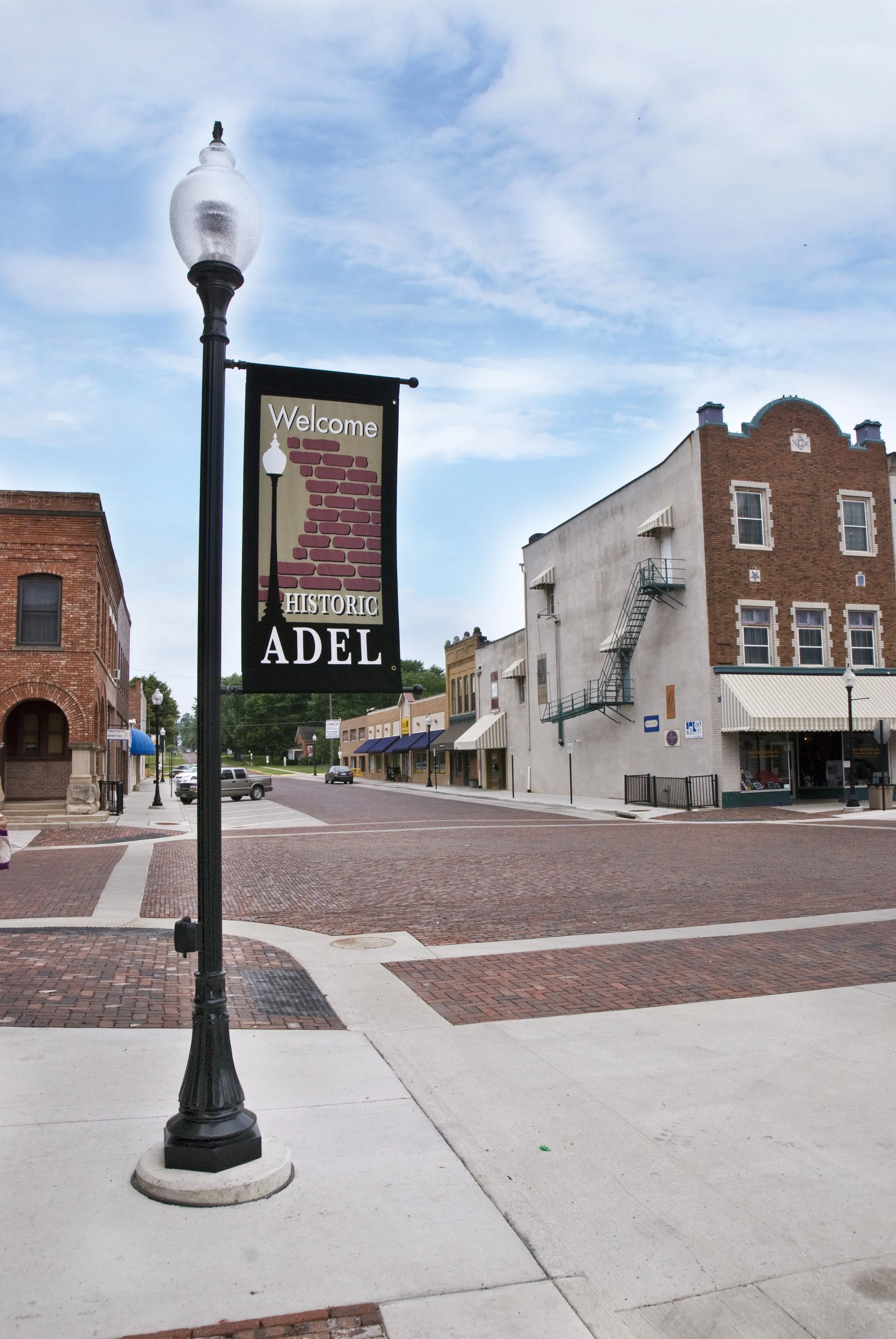
Adel Historic Preservation Grant
Adel's Courthouse Square District (ACSD) is comprised of buildings dating from 1868 through the mid-twentieth century. These architecturally and historically significant buildings, along with the brick streets, contribute to the unique ambiance of Adel. To preserve the historical significance and retain and promote a retail presence on the square, the City of Adel and Adel's Historic Preservation Commission has committed funds from Tax Increment Financing (TIF) for qualifying interior and exterior renovation and new construction within the ACSD area.
An applicant may receive grant assistance of 50% of the project costs, up to a maximum of $5,000.00 for interior capital improvements and renovations of existing structures. The improvements must comply with the Design Guidelines for the ACSD and meet Americans with Disabilities Act guidelines if the renovation threshold meets said requirements. No funds will be authorized for in-kind labor.
An applicant may receive grant assistance of 100% of the project costs, up to a maximum of $10,000.00 for exterior improvements on both old and new structures. The improvements must comply with the Design Guidelines for the ACSD. No funds will be authorized for in-kind labor.
You can access information about Adel’s Historic Preservation Grant program via the “City of Adel, Iowa” website under the “Permits and Forms” heading. Scroll down to “Historic Preservation Grant”. General information about the application process and the online grant application page are available. The application period is throughout the fiscal year, depending on available funding. View this map to learn if your business is in Adel’s Historic Square District.
Dallas County Foundation
The Dallas County Foundation has helped fund many historic preservation projects in Adel. Information concerning the Dallas County Foundation grant program, including the instructions and application, can be found on the Dallas County Foundation website under “Grant Info.” The application period is from December through January.
Federal Tax Credits and Grants
Federal Disabled Access Credit
The disabled access credit is a non-refundable credit for small businesses that have expenses for providing access to persons with disabilities. The IRS defines an eligible small business as that earned $1 million or less or had no more than 30 full-time employees in the previous year. The business can claim the credit each year they incur expenditures.
The architectural barrier removal tax deduction encourages businesses of any size to remove architectural and transportation barriers to the mobility of people with disabilities and the elderly. Businesses may claim a deduction of up to $15,000 a year for qualified expenses on items that normally must be capitalized.
Businesses claim this deduction by listing it as a separate expense on their income tax return. Also, businesses may use the disabled tax credit and the architectural/transportation tax deduction together in the same tax year if the expenses meet the requirements of both sections. To use both, the deduction is equal to the difference between the total expenses and the amount of the credit claimed.
Federal Architectural Barrier Removal Tax Deduction
The Architectural Barrier Removal tax deduction encourages businesses of any size to remove architectural and transportation barriers to the mobility of people with disabilities and the elderly. Businesses may claim a deduction of up to $15,000 a year for qualified expenses on items that normally must be capitalized. Businesses claim this deduction by listing it as a separate expense on their income tax return.
Businesses may use the Disabled Tax Credit and the architectural/transportation tax deduction together in the same tax year if the expenses meet the requirements of both sections. To use both, the deduction is equal to the difference between the total expenses and the amount of the credit claimed..
Federal Rehabilitation Tax Credit
The rehabilitation credit under Internal Revenue Code (IRC) Section 47 provides a tax incentive to rehabilitate historic buildings. Rehabilitation includes renovation, restoration, or reconstruction of a building, but doesn't include an enlargement or new construction. If your rehabilitation and expenses qualify, you may claim a tax credit equal to 20% of your qualified expenses. The credit is allocated ratably over a 5-year period on your federal income tax return.
The structure being rehabilitated must be as certified historic structure by the National Park Service (NPS). This means its either:
Listed on the National Register of Historic Places or;
Located in a registered historic district and certified by the NPS to the IRS as being of historic significance
Taxpayers that own an interest in the building directly or through a passthrough entity or are lessees of the building (in certain cases) are eligible to claim the rehabilitation credit. Click here for more on eligibility.
State Tax Credits
Iowa’s State Historic Preservation Tax Credit Program provides a state income tax credit for the sensitive, substantial rehabilitation of historic buildings. It ensures character-defining features and spaces of buildings are retained and helps revitalize surrounding neighborhoods. The program provides an income tax credit of up to 25% of qualified rehabilitation expenditures (QREs). QREs generally include expenditures related to structural components of the building and some soft costs that would normally be charged to a capital account
Any “eligible taxpayer” may apply for the credit. This is defined as the fee simple owner of the property or someone having a long-term lease that which meets the requirements of the federal rehabilitation credit. Otherwise you can apply if you have notarized, written permission from the fee simple owner indicating the owner is aware of the application and has no objection.
The building must meet at least one of the following criteria:
Building is listed on the National Register of Historic Places or determined by the staff at SHPO to be eligible for listing
Building is contributing to the significance of a historic district that is listed on or eligible to be listed on the National Register of Historic Places
Building is designated as a local landmark by city or county ordinance
Barn constructed before 1937, or a barn listed on or eligible for listing on the National Register of Historic Places
The rehabilitation must meet the following substantial rehabilitation requirements:
For commercial buildings: Qualified rehabilitation expenditures must equal at least 50% value of the building (excluding land) before rehabilitation or $50,000, whichever is less
For non-commercial buildings: Qualified rehabilitation expenditure must equal at least 25% of the assessed value of the building (excluding land) before rehabilitation or $25,000, whichever is less